
August 4, 2026
From Cost Center to Revenue Model
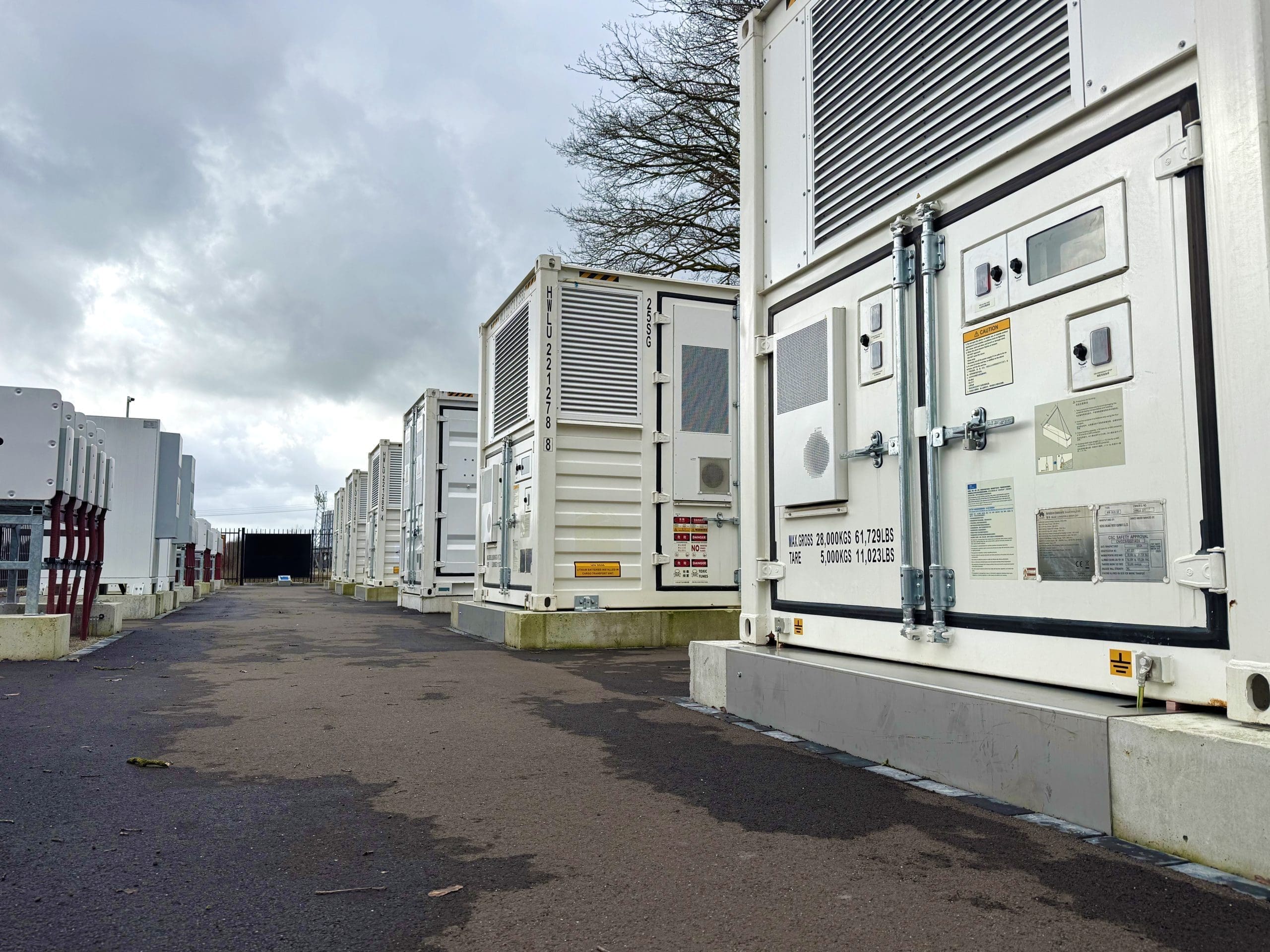
VEGHEL, August 4, 2026 – In July, Covolt surpassed the 800-megawatt mark in managed solar and battery capacity, a level comparable to that of an average Dutch power plant. However, this is a virtual power plant: rather than being concentrated in a single location, the capacity is spread across more than 900 business sites in the Netherlands and Belgium, fully coordinated by artificial intelligence. With a growing pipeline of contracted capacity, Covolt is heading toward the 1,000-megawatt mark. The company autonomously manages solar farms, batteries, and large energy consumers.
That growth didn’t come out of nowhere. According to the most recent analysis by the comparison site Overstappen.nl (published on May 13, 2026), based on EPEX market data, the number of hours per year with a negative electricity price in the Netherlands—the moment when the supply of green electricity structurally exceeds demand—rose from 67 hours in 2021, through 465 hours in 2024, to 584 hours throughout 2025: nearly nine times as many as in 2021.
That trend is continuing this year. After a record-breaking hot June—featuring a heat wave from June 18 through 29 and a national record temperature of 39.4°C—the summery weather persisted into July. This led to a spike in solar power generation, and consequently, to grid congestion and negative electricity prices.
At the same time, demand for flexibility (storage, control, balancing) is expected to grow from about 100 gigawatts today to over 400 gigawatts by 2033. More than 15,000 Dutch large-scale consumers—ranging from distribution centers to greenhouse horticulture companies and businesses electrifying their vehicle fleets—are now on the waiting list for a new or higher-capacity grid connection, with wait times of up to five years.
For companies with solar panels, batteries, or high energy needs, this means their systems risk turning from an investment into an expense: electricity that cannot be supplied or purchased is wasted revenue.
Covolt turns this on its head. The platform, Covolt Horizon, controls energy installations completely autonomously and automatically trades surplus or flexible capacity on the energy market—always in the way that yields the highest return at that moment—so that companies actually earn money from grid congestion rather than suffering from it. In doing so, Covolt acts as both a Balancing Service Provider (BSP, active on the national grid) and a Congestion Service Provider (CSP, focused on local grid congestion). What truly sets the company apart: it also actively trades on the short-term energy markets (Day-ahead and Intraday)—which significantly narrows the pool of companies capable of doing so—and handles the technical control of the installations itself. This combination of market participation and technical expertise under one roof is rare among providers.
Every second, the platform’s AI model assesses each installation—whether it involves solar panels, batteries, or charging stations—to determine whether it is more advantageous to generate, store, consume, or sell energy, based on current market prices, weather forecasts, and the status of the grid. The system makes these kinds of control decisions an estimated 9 million times a day.
“This 800-megawatt milestone demonstrates that independent, AI-driven control works on a large scale, and the path to 1,000 megawatts is already clear. More and more companies are discovering that their energy infrastructure doesn’t have to be a cost center, but can become a direct source of revenue,” notes René Pruijssers, CEO of Covolt.
The company expects pressure on the Dutch and Belgian power grids to increase further in the coming years, and with it, the demand for independent, autonomous control of energy facilities
About Covolt
Covolt is an independent energy aggregator that fully autonomously controls, monitors, and optimizes large-scale commercial and industrial (utility & C&I) energy installations—such as mega-batteries, charging stations, and large solar rooftops. As both a certified Balancing Service Provider (BSP) and Congestion Service Provider (CSP), the company provides access to balancing, congestion, and energy markets. It was founded in 2021 and operates in the Netherlands and Belgium, with its headquarters in Brainport Eindhoven (Veghel) and a branch office in Antwerp. For more information: covolt.eu
Note to the editor, not for publication:
For interviews and/or visual material (platform, locations, portraits), please contact Annelies Putman Cramer at Fair Focus, annelies@fairfocus.nl and +31 (0)6 53 215 475.
