
September 1, 2026
Network Congestion and the Role of a Congestion Service Provider (CSP)

Published by
Teun van Sinten
Covolt Netherlands
More and more companies are reaching the limits of their electricity connections. Not because they’re using too much power, but because the grid is at capacity. Companies that fail to address this issue risk slowing their growth or having to make costly investments in grid expansion that could take years to materialize. With the flexibility that a Congestion Service Provider can offer, you can actually turn that into an advantage.
What is network congestion?
Grid congestion occurs when, at a specific time and location, the power grid does not have enough capacity to transmit all the electricity demanded. More and more companies are simultaneously seeking greater power capacity: charging stations for electric vehicles, heat pumps, battery storage, and the electrification of production processes. Grid operators such as TenneT and the regional grid operators cannot always keep up with this growth; expanding a grid requires years-long processes for permits, cables, and substations.
The result: transmission capacity shortages are occurring in more and more locations on the transmission capacity map. New connections for large-scale consumers are placed on a waiting list, and existing connections may be temporarily restricted.
The question is no longer whether your region will face grid congestion, but when—and whether you're prepared for it.
How do grid operators handle this?
To keep the grid in balance without having to immediately invest in expensive reinforcement, grid operators are increasingly purchasing flexibility from market participants. This is done through the platform GOPACS, where grid operators post congestion issues at specific times and locations on the market.
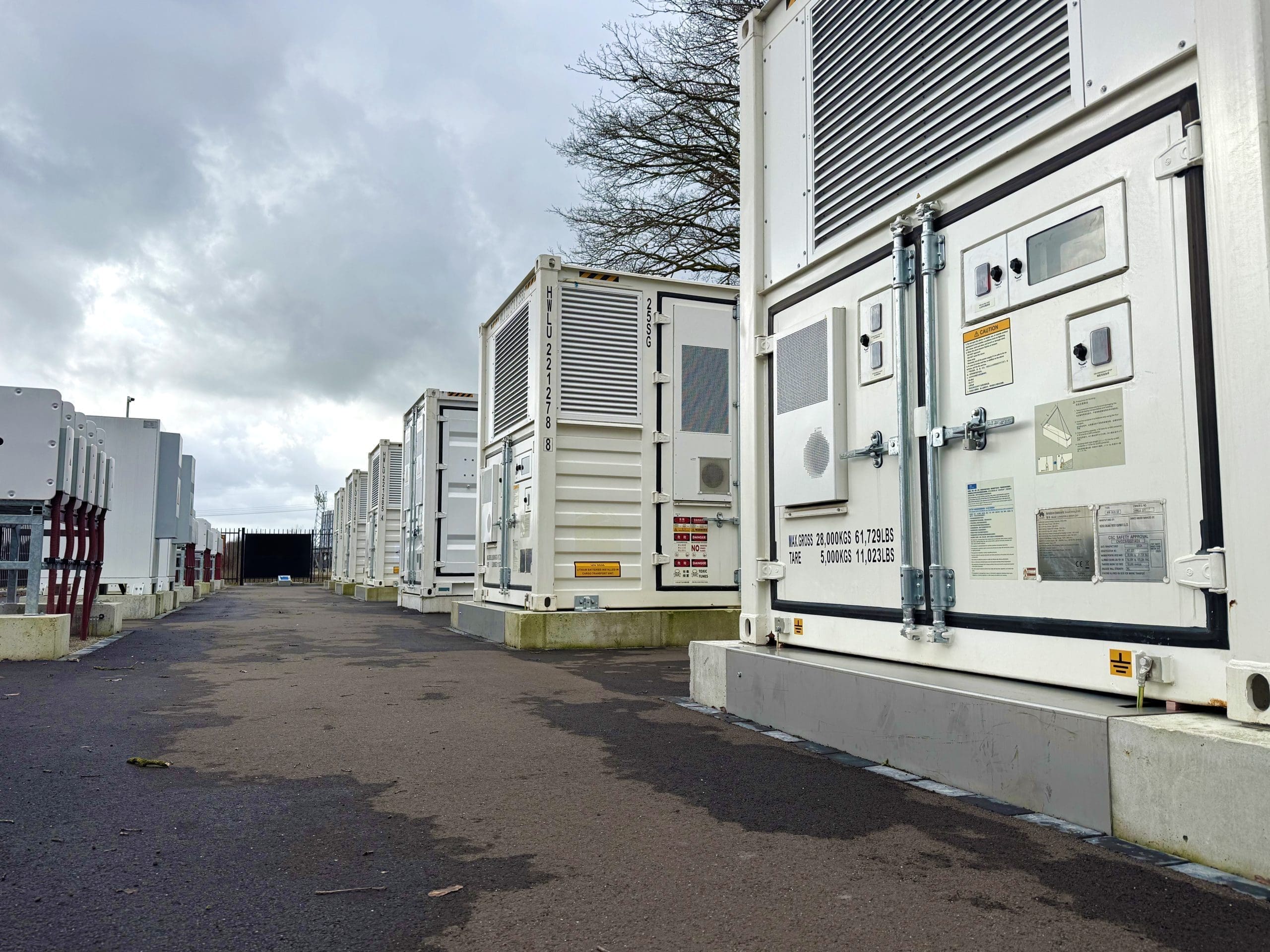
Parties that can aggregate and offer flexible capacity to alleviate that congestion are called Congestion Service Providers (CSPs). Covolt holds this accreditation, and we aggregate the flexibility of our customers’ batteries and solar farms and deploy it strategically when a grid operator requests it.
In practice, this is done through a capacity control contract (CSC): an agreement between the grid operator, the asset owner, and Covolt as the CSP, which stipulates that the installation will temporarily reduce its power consumption or generation upon request. In exchange, you receive compensation and greater certainty regarding your grid connection.
What can Covolt do for you?
Congestion Service Provider (CSP) Covolt negotiates and manages CSC contracts with grid operators on behalf of customers.
Power Control We intelligently coordinate battery, solar power, and consumption so that you stay within your connection limits, including automatic peak shaving when needed.
Virtual Power Plant Individual installations from multiple customers are bundled into a single flexible power unit. This allows Covolt to participate in congestion services for which an individual installation would be too small.
Combination with Trading Congestion management does not have to come at the expense of other revenue streams. Covolt combines CSC obligations with imbalance trading, day-ahead optimization, and aFRR, ensuring your asset is utilized as profitably as possible at all times.
MyHorizon app Through the app, you can see exactly when and why adjustments were made for congestion management—and what benefits that brings you.
What does this mean for you?
- Peace of mind about your connection: With a CSC contract, you get clarity and often priority when the grid is at capacity.
- No (or delayed) investment in grid reinforcement: flexible load management can prevent or postpone a costly expansion of the grid.
- Additional income: You’ll receive compensation from the grid operator for providing flexibility.
- No impact on your business operations: Covolt manages the installation; you don't have to do or change anything yourself.
- Smartly integrated: congestion management works in tandem with Covolt's other services, rather than being a separate, standalone system.
Ready to get started?
Would you like to know if your connection is vulnerable to grid congestion, and what benefits a CSC contract can offer you?
Contact us or schedule a no-obligation consultation.
Want to take advantage of the flexibility of a CSP?
We’ll work with you to analyze how grid congestion can be turned into an advantage—with no obligations and quick implementation.
Frequently Asked Questions About Grid Congestion and CSP
What is a Congestion Service Provider (CSP)?
A Congestion Service Provider (CSP) is a market participant that offers flexible capacity to the grid operator on behalf of affiliated companies to resolve grid congestion. The CSP translates requests from the grid operator into specific instructions for facilities such as solar farms, batteries, or charging stations, and in most cases also handles billing. Covolt acts as a CSP for its customers.
What is a capacity management contract (CSC)?
A Capacity Management Contract (CSC) is an agreement with the grid operator whereby a connected customer, in exchange for compensation, temporarily adjusts their electricity consumption or feed-in when the grid requires it. The CSC is the successor to the Capacity Restriction Contract (CBC) and offers greater flexibility, as it also allows for increased consumption or supply at the grid operator’s request. Participants receive both a fixed availability fee and a fee per call.
Can congestion management be combined with other services?
Curtailment and nominations remain possible alongside a CBC/CSC or Redispatch request, in which case Covolt automatically adjusts the nominations. Charging stations connected to the same service connection also pose no problem.
