
Managing a Charging Station Without Grid Issues: How to Charge More EVs Without a More Expensive Connection

Published by
Teun van Sinten
Covolt Netherlands
You're electrifying your fleet. Or your parking lot is getting more charging stations. And then the question arises: Can my utility connection handle it?
For many companies, the answer right now is: no. The power grid is at capacity in many areas (grid congestion), waitlists for grid upgrades stretch out for several years, and the costs are high. But there is another way: intelligently managing the power that is actually available. Covolt manages the energy systems at more than 900 business locations in the Netherlands and Belgium, including those of Van Acht Logistics in Veghel. There, three AC charging points and one DC charging point are integrated into the same control system as a 6 MW mega-battery and 18,572 solar panels.
The problem: more charging stations, the same connection
Electric vehicles charge quickly. A DC fast charger can easily draw 50 to 150 kW, and chargers for electric trucks can reach 350 kW or more. When multiple vehicles are charging at the same time, the power consumption spikes. This can cause you to exceed your grid connection capacity, resulting in additional grid charges or a blown main fuse.
The traditional solution is to upgrade the grid: request a higher-capacity connection from the grid operator. But in congested areas, that can take years—if it’s even possible—and can easily cost tens of thousands of euros or more. Meanwhile, the real question is a different one: how can you make smarter use of the capacity you already have?
The solution to grid congestion at your charging station: smart management of your charging points
- Your company's current energy consumption
- The current power output of your solar panels
- What your battery does in that situation: if your charging points run out of capacity, the battery steps in to help
- The Limits of Your Internet Connection
AC and DC on a single connection: how does that work?
AC charging stations (alternating current) charge more slowly. Because vehicles are connected to them for long periods, the charging process can be spread out over time. They are ideal for vehicles that are parked for extended periods, such as company vehicles overnight or employee cars during the day.
DC (direct current) charging stations charge much faster, but they also draw much more power in a short period of time. That’s exactly where smart control makes a difference. Covolt adjusts charging to match the total power consumption on your connection. This allows DC chargers to charge at full capacity when there’s capacity available and to scale back as soon as other major power consumers come online.
Combining AC, DC, a battery, and solar panels into a single connection requires coordination. Covolt Horizon handles this automatically, without you having to do a thing.
Case Study: Van Acht Logistics in Veghel
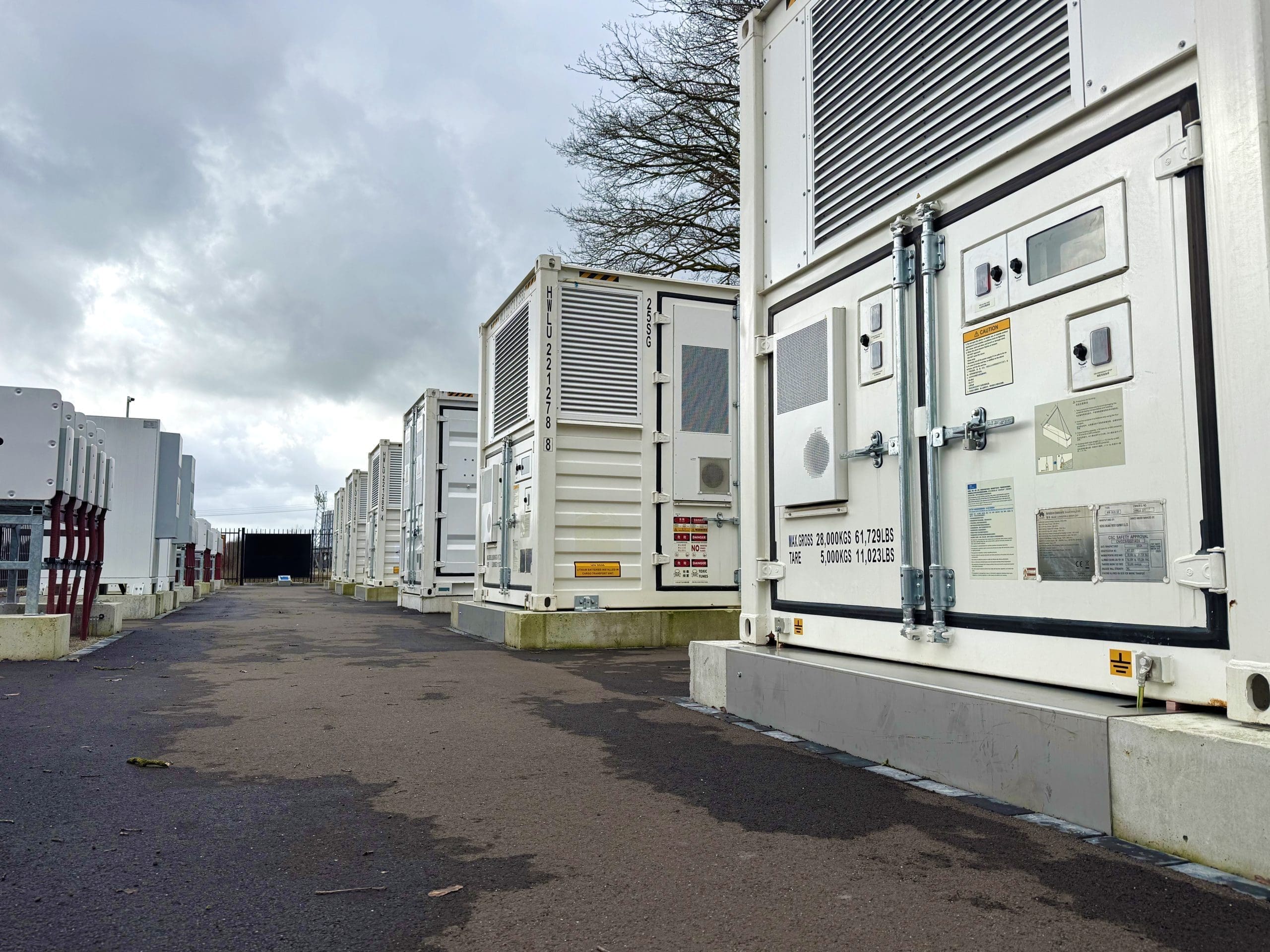
Van Acht Logistics is a family-owned business specializing in refrigerated, frozen, and non-temperature-controlled storage and transportation. The roof of its distribution center in Veghel is home to 18,572 solar panels with a total capacity of 11,285 kWp. Since April 2025, it has been equipped with a 6 MW / 12 MWh mega-battery, managed by Covolt.
The installation includes three AC charging stations for cars and one DC charging station for electric trucks. Covolt integrates the battery, solar panels, and charging stations into a single control system. If the charging stations run out of power—for example, when the sun isn’t shining and the cold storage facility requires a lot of electricity—the battery can step in. This allows the trucks to continue charging without disrupting the company’s operations.
What are the benefits of smart charging station control?

"Thanks to Covolt, we're now charging smartly and paying much less."
Paul van Acht · Van Acht Logistics, Veghel
- Charge More EVs Using Your Current Connection, Without Upgrading the Power Grid
- Lower kWmax costs due to smoothed-out peaks
- More self-generated solar power for your vehicles: when the panels generate a lot of power, your charging stations automatically get more capacity
- The battery steps in when your charging points run out of capacity, and outside of those times, it earns money on the energy markets through Flex Trading
- Ready for EREs: Covolt records the charging data that an ERE provider needs to convert your charging usage in the Netherlands into additional revenue
Which companies would find this interesting?
Smart charging station management is relevant for any company that:
- A company that has electrified or plans to electrify its own vehicle fleet
- A parking lot with multiple charging stations
- In addition to the charging stations, solar panels or a battery
- Reaching the limits of the power connection
Examples include: logistics centers, distribution centers, shopping centers with parking garages, real estate landlords, park-and-ride facilities, and business parks with a shared loading area.
More charging stations. Without a more expensive connection.
In a single consultation, Covolt will determine how many charging stations your installation can handle and what benefits smart control can provide.
Frequently Asked Questions About Charging Stations and Grid Congestion
Can I connect more charging stations without increasing the capacity of my utility connection?
In many cases, yes. Covolt automatically manages your charging stations based on available power, taking into account your energy consumption, your solar panels, and your battery, so that you stay within the limits of your utility connection. The extent of the benefit depends on your system and consumption profile. Covolt will calculate this during a free consultation.
What is the difference between AC and DC charging points in smart charging station control?
AC charging stations charge more slowly and allow for charging to be spread out over time, making them ideal for vehicles that are parked for extended periods. DC charging stations charge faster but also draw more power. Covolt adjusts both types of charging to match the capacity of your connection, so that both AC and DC charging can be maximized within the limits of your connection.
Do I need a battery for smart charging station control?
Not necessarily. Covolt can also intelligently control your charging stations without a battery, based on grid capacity and solar generation. A battery does, however, expand your options: it steps in when your charging stations run out of capacity—for example, when the sun isn’t shining or your business is drawing a lot of power—and it also generates revenue on the energy markets.
Does Covolt work with all charging station suppliers?
Covolt offers AC and DC charging stations that support the open OCPP protocol (version 1.6J or higher) and smart charging—and most popular brands do as well. During a consultation, ask whether your specific make and model are compatible.
